
RUO Disclaimer: All QRM products are strictly for in vitro laboratory and research use only by qualified researchers in appropriate facilities. Nothing here implies, suggests, or recommends any diagnostic, therapeutic, or clinical application or use in humans or animals.
- SSL Secured
- Secure Checkout
- Guaranteed Delivery
- Third-Party Tested
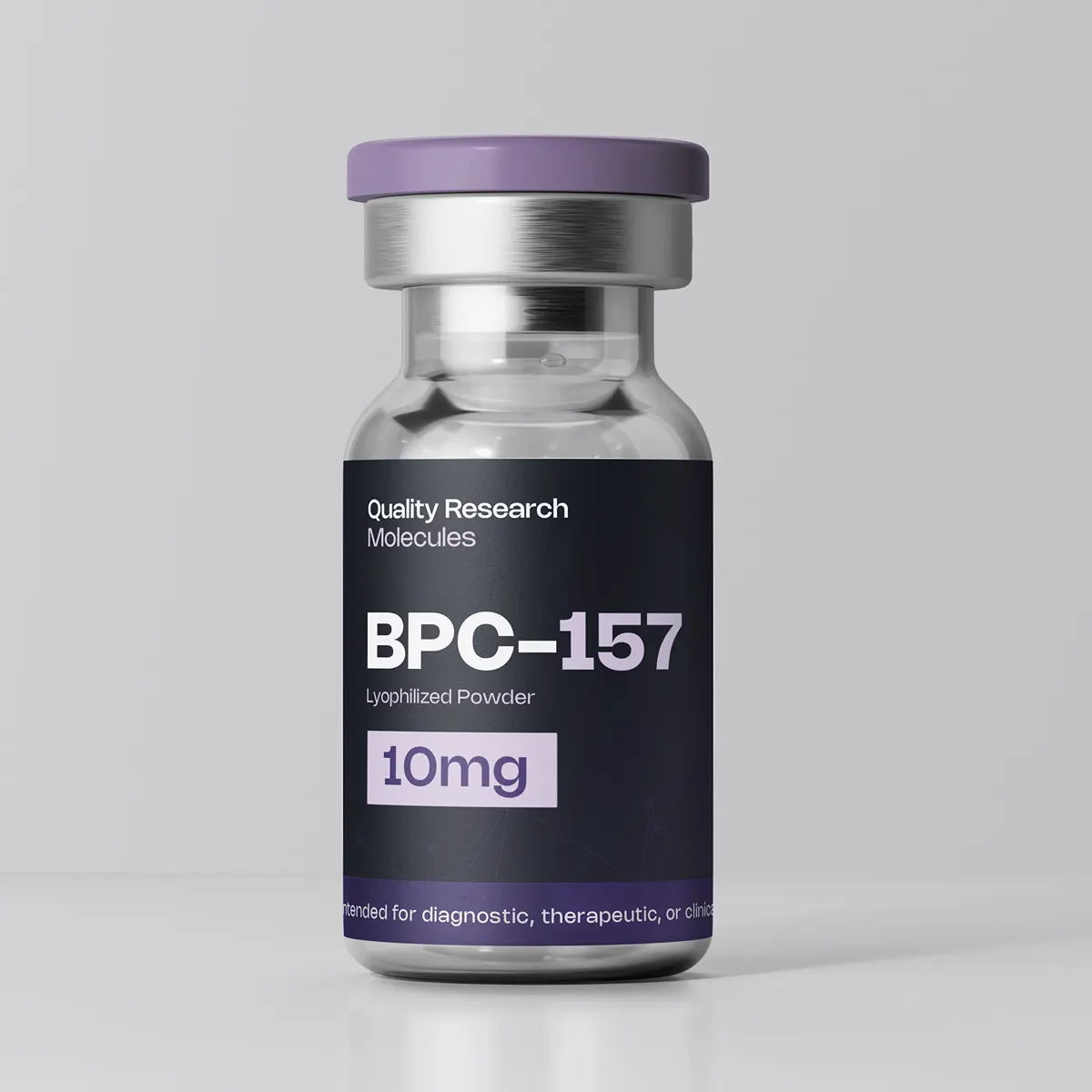
BPC-157
One of the most studied peptides in preclinical research, investigated across a broad range of cellular and tissue models. A foundational compound for researchers exploring regenerative signaling pathways in vitro.
$50.00
- +99% Purity
- Third-Party Tested
- COA Available
- SSL Secured
- Secure Checkout
- Guaranteed Delivery
- Third-Party Tested
One of the most studied peptides in preclinical research, investigated across a broad range of cellular and tissue models. A foundational compound for researchers exploring regenerative signaling pathways in vitro.
About BPC-157
BPC-157, short for Body Protection Compound-157, was first isolated from a protein found in gastric juice research models, where it is thought to play a role in protecting and maintaining the integrity of gastrointestinal lining signaling pathways. Researchers at the University of Zagreb, led by Professor Predrag Sikiric, were among the first to investigate its properties systematically, and the body of preclinical research that has accumulated since has made BPC-157 one of the most studied peptides in experimental regenerative research.
What makes BPC-157 particularly notable in research is the range of tissue signaling contexts in which its effects have been studied. Most peptides investigated for tissue repair show meaningful activity in one or two research systems. BPC-157 has been studied across gastrointestinal, musculoskeletal, vascular, neurological, and dermal signaling contexts, an unusually broad profile that has made it a subject of interest for researchers studying general repair signaling mechanisms rather than tissue-specific pathways alone.
Central to BPC-157’s studied activity is its apparent ability to influence new blood vessel formation signaling, the behavior of cells involved in tissue repair pathway activity, and the signaling pathways that regulate inflammation. Researchers have investigated how these effects interact, theorizing that BPC-157’s ability to simultaneously support vascular signaling, recruit repair cells, and modulate inflammatory pathway activity may contribute to the accelerated repair signaling outcomes observed across multiple tissue types in preclinical research models.

Mechanism of Action
- Angiogenic Signaling Activity: BPC-157 has been studied for its effects on blood vessel formation signaling, specifically its ability to activate pathways that prompt new capillary growth into damaged tissue research models. Research has investigated BPC-157 for its potential to restore vascular signaling support faster than would otherwise occur in controlled research settings, with adequate blood supply studied as a prerequisite for tissue repair pathway activity.
- Fibroblast Activity and Collagen Signaling: Studies have examined BPC-157’s influence on fibroblasts, the cells primarily responsible for producing collagen and rebuilding the structural framework of damaged tissue at the cellular level. Research has investigated whether BPC-157 accelerates fibroblast signaling activity, leading to faster and more organized tissue repair pathway activity in wound and injury research models.
- Nitric Oxide Signaling Modulation: BPC-157 has been investigated for its effects on nitric oxide signaling, a chemical messenger studied for its role in regulating blood flow, inflammatory pathway activity, and cellular communication at the molecular level. Researchers have studied whether modulation of this pathway contributes to BPC-157’s broad observed signaling effects across tissue research contexts.
- Anti-Inflammatory Pathway Activity: Research has examined BPC-157’s anti-inflammatory signaling activity, with studies investigating its potential to reduce persistent low-grade inflammatory pathway activity that interferes with tissue repair signaling in research models. Investigators have studied BPC-157 for its potential to modulate the transition between acute and chronic inflammatory signaling states in controlled research environments.
- Growth Factor Receptor Expression: BPC-157 has been studied for its effects on growth factor receptor expression at the cellular level, specifically its potential to increase repair-associated cell responsiveness to the signaling cues that direct growth, migration, and tissue rebuilding pathway activity in preclinical research models.

Research Highlights
BPC-157's origins are in gastrointestinal research, and this remains one of its most studied signaling contexts. Preclinical studies have examined its effects on mucosal tissue repair signaling, inflammatory pathway modulation, and barrier integrity markers, establishing it as one of the more extensively researched peptides in gut barrier signaling biology.
BPC-157 has been extensively studied in connective tissue injury research models, with studies examining its effects on collagen organization, repair signaling, and mechanical recovery markers compared to untreated controls. These findings have made it one of the most referenced peptides in preclinical musculoskeletal repair signaling research.
A defining feature of BPC-157's research profile is the consistency of its pro-angiogenic signaling activity across tissue research contexts. Research has examined its VEGF pathway interactions and nitric oxide signaling modulation as potential mechanisms underlying its vascular support activity, with investigators studying whether this dimension is a primary driver of its broad tissue repair research profile.
Emerging research has investigated BPC-157's potential effects on neurological signaling pathways in nerve injury and neurotoxic exposure research models. Some studies have also explored its potential interactions with dopamine signaling pathways, broadening its relevance to investigators studying neural repair signaling in controlled research settings.
Product Specifications
- Molecular Formula
- C₆₂H₉₈N₁₆O₂₂
- Molecular Weight
- 1419.55 g/mol
- CAS #
- 137525-51-0
- Sequence
- Gly-Glu-Pro-Pro-Pro-Gly-Lys-Pro-Ala-Asp-Asp-Ala-Gly-Leu-Val
- Purity
- ≥99% (HPLC verified)
- Form
- Lyophilized powder
- Appearance
- White to off-white powder
- Solubility
- Universal Solvent
- Storage
- -20°C (lyophilized), 2-8°C (after preparation)
Reference
- Smith, J. A., & Novak, P. (2017). Pentadecapeptides and their role in tissue signaling pathways. Journal of Experimental Peptide Science, 12(3), 145–158.
- Horvat, M., Kovačević, D., & Marin, I. (2018). Stability of gastric-derived peptides in acidic environments. International Journal of Molecular Research, 21(7), 882–896.
- Lee, T. H., & Andersen, R. (2019). Endothelial signaling responses to synthetic peptides in preclinical models. Vascular Biology Reports, 8(2), 67–79.